Please click the Follow button below to get updates from The Professor.

Follow this blog

Thursday, January 13, 2011

Hearsay


Kelly asked about the word hearsay. It’s apparent that it is the conjunction of two words, hear and say. In colloquial use, hear sometimes precedes (and is combined with) the verbs speak, talk, and tell.

There’ll be a time I hear tell


When all will be well


When God and man will be reconciled

But until men lose their chains


And righteousness reigns


Lord, protect my child

Bob Dylan


Hearsay refers to information that one has heard someone else say—in others words, a case of secondary oral transmission. The word usually carries the implication that what one has heard may not be reliable, that it should be treated as rumor. Thus, it is often expressed as mere hearsay or only hearsay.


Generally speaking , hearsay evidence is not admissible in a court of law, but many exceptions are listed in the sidebar below.


SIDEBAR: Hearsay Evidence [See Rules 802-807]

http://www.law.cornell.edu/rules/fre/rules.htm


Available from McFarland & Co.: Word Parts Dictionary, 2nd edition


Check out Mike's program-based books here:
Arbutus Press
or at Amazon.com


Listen to Mike’s program in real time every Tuesday morning, 9:00 - 10:00 a.m. EST, by going to wtcmradio.com and clicking on Listen Now.

There is a collection of podcasts. Go to wtcmradio.com and click on Podcasts. Scroll down The Ron Jolly Show to find the Words to the Wise audio button.

Visit The Senior Corner at seniors.tcnet.org


Monday, January 10, 2011

Red-letter Day


Brian asked about the origin of red-letter day. It means a day or date of special significance.

It tracks back to medieval liturgical calendars. The days that commemorated saints’ days or special festivals were literally printed in red ink to make them stand out. Less auspicious or less important days were printed in black ink, and were referred to as black-letter days.

SIDEBAR: Pet Shop Boys: A Red Letter Day


Available from McFarland & Co.: Word Parts Dictionary, 2nd edition


Check out Mike's program-based books here:
Arbutus Press
or at Amazon.com


Listen to Mike’s program in real time every Tuesday morning, 9:00 - 10:00 a.m. EST, by going to wtcmradio.com and clicking on Listen Now.

There is a collection of podcasts. Go to wtcmradio.com and click on Podcasts. Scroll down The Ron Jolly Show to find the Words to the Wise audio button.


Visit The Senior Corner at seniors.tcnet.org


Thursday, January 06, 2011

Cry Uncus!


Last Tuesday’s vocabulary quiz on Words to the Wise featured the word unciform, meaning hook-shaped. It is an offshoot of the Latin word uncus, a hook. In turn, that owed its existence to the Greek word ὄγκος (onkos), hook.

In both cases, the words had various applications—everything from a fish hook to a grappling iron to the barb of an arrow to a gruesome device used to drag the corpses of executed criminals along the ground to dump them in the Tiber River.

Many of the words based on those roots are obsolete, but they are interesting and worthy of review.

• aduncate: hooked or bent inward
• inuncate: to hook or entangle
• obuncous: very crooked
• uncate: hook-shaped or furnished with hooks
• unciform: hook-shaped
• uncinariasis: hookworm disease
• uncinate: hooked or furnished with hooks
• uncinus: a hook-shaped process
• uncked: hooked
• uncous: hooked or curved
• uncus: a hook or hook-like process


Available from McFarland & Co.: Word Parts Dictionary, 2nd edition


Check out Mike's program-based books here:


Listen to Mike’s program in real time every Tuesday morning, 9:00 - 10:00 a.m. EST, by going to wtcmradio.com and clicking on Listen Now.

There is a collection of podcasts. Go to wtcmradio.com and click on Podcasts. Scroll down The Ron Jolly Show to find the Words to the Wise audio button.


Visit The Senior Corner at seniors.tcnet.org

Monday, January 03, 2011

Proud Wounds and Door Panels


The images used to portray a proud person often share the idea of inflation. The proud man sticks out his chest. He is puffed up with pride or bloated or swollen with pride. He believes that he stands out above the rest.

I am speculating, but I think that this stereotype accounts for two other meanings for proud that came up on my last show.

The first one appears in the phrase proud flesh. When there is a gap in a healing wound, granulated tissue forms to bridge the gap. When there is too much of it, it stands out higher than the adjacent tissue. It is often discussed in horses, but it can occur in humans, too. It appeared in the book History of Fovre-footed Beastes by E. Topsell in 1607: “Vsed by Phisitians for taking downe of proud swelling wounds.”

Second, door panels can be proud. These are panels that protrude, that are raised, rather than sit flush with the frame. Traditional doors often have the panels proud. It can pertain to drawer fronts, too, as attested by the description from an antique dealer: “French-style side or wine table. Solid timber frame and drawer fronts, with single proud panel-front drawer with cast iron pull.”


Available from McFarland & Co.: Word Parts Dictionary, 2nd edition


Check out Mike's program-based books here:
Arbutus Press
or at Amazon.com


Listen to Mike’s program in real time every Tuesday morning, 9:00 - 10:00 a.m. EST, by going to wtcmradio.com and clicking on Listen Now.

There is a collection of podcasts. Go to wtcmradio.com and click on Podcasts. Scroll down The Ron Jolly Show to find the Words to the Wise audio button.


Visit The Senior Corner at seniors.tcnet.org


Friday, December 31, 2010

Happy New Year


The Death of the Old Year  gif Alfred, Lord Tennyson (1842) clr gif

Full knee-deep lies the winter snow,
And the winter winds are wearily sighing:
Toll ye the church bell sad and slow,
And tread softly and speak low,
For the old year lies a-dying.
Old year you must not die;
You came to us so readily,
You lived with us so steadily,
Old year you shall not die.

He lieth still: he doth not move:
He will not see the dawn of day.
He hath no other life above.
He gave me a friend and a true truelove
And the New-year will take ’em away.
Old year you must not go;
So long you have been with us,
Such joy as you have seen with us,
Old year, you shall not go.

He froth’d his bumpers to the brim;
A jollier year we shall not see.
But tho’ his eyes are waxing dim,
And tho’ his foes speak ill of him,
He was a friend to me.
Old year, you shall not die;
We did so laugh and cry with you,
I’ve half a mind to die with you,
Old year, if you must die.

He was full of joke and jest,
But all his merry quips are o’er.
To see him die across the waste
His son and heir doth ride post-haste,
But he’ll be dead before.
Every one for his own.
The night is starry and cold, my friend,
And the New-year blithe and bold, my friend,
Comes up to take his own.

How hard he breathes! over the snow
I heard just now the crowing cock.
The shadows flicker to and fro:
The cricket chirps: the light burns low:
’Tis nearly twelve o’clock.
Shake hands, before you die.
Old year, we’ll dearly rue for you:
What is it we can do for you?
Speak out before you die.

His face is growing sharp and thin.
Alack! our friend is gone,
Close up his eyes: tie up his chin:
Step from the corpse, and let him in
That standeth there alone,
And waiteth at the door.
There’s a new foot on the floor, my friend,
And a new face at the door, my friend,
A new face at the door.


Available from McFarland & Co.: Word Parts Dictionary, 2nd edition


Check out Mike's program-based books here:
Arbutus Press
or at Amazon.com


Listen to Mike’s program in real time every Tuesday morning, 9:00 - 10:00 a.m. EST, by going to wtcmradio.com and clicking on Listen Now.

There is a collection of podcasts. Go to wtcmradio.com and click on Podcasts. Scroll down The Ron Jolly Show to find the Words to the Wise audio button.


Visit The Senior Corner at seniors.tcnet.org


Wednesday, December 29, 2010

Faux Foe


I saw a header on CNBC yesterday that read, “ETFs: Friend or Faux?” How clever, thought I, wondering whether some inventive writer on that channel had coined the term. Curious, I used Google to check, and discovered 297,000 hits. Where have I been hiding?


Since faux is pronounced foe, it’s a neat play on words. It was used

  • as the title of a book by Heather Wagner (Friend or Faux: A Guide to Fussy Vegans, Crazy Cat Ladies, Creepy Clingers, Undercover Sluts, and Other Girls Who Will Quietly Destroy Your Life),
  • as the name of a pop punk band located in San Diego,
  • as the name of a 2009-2010 exhibit at the Rosenbach Museum (Friend or Faux: Imitation and Invention, from Innocent to Fraudulent),
  • as the title of a 2006 article in Acupuncture Today (Candida Allergy: Friend or Faux? by Kaleb Montgomery, DTCM),
  • as the theme of MTV’s season 5 of The Hills,
  • as the name of at least three custom painters who specialize in trompe l’oeil,
  • as the title of a 2003 article in Time Magazine and a 2002 article in The Los Angeles Times, and on and on.

The word faux shows up in a number of set phrases from the French:

  • faux bonhomme: a sly, shifty person who assumes an open and good-natured manner;
  • faux-bourdon: the undersong or refrain in a song;
  • faux-naïf: a person who pretends to be simple or unaffected and adopts a childish or naïve manner;
  • faux pas: a false step or slip;
  • faux-prude: a man who simulates prudishness.


Available from McFarland & Co.: Word Parts Dictionary, 2nd edition


Check out Mike's program-based books here:
Arbutus Press
or at Amazon.com


Listen to Mike’s program in real time every Tuesday morning, 9:00 - 10:00 a.m. EST, by going to wtcmradio.com and clicking on Listen Now.

There is a collection of podcasts. Go to wtcmradio.com and click on Podcasts. Scroll down The Ron Jolly Show to find the Words to the Wise audio button.


Visit The Senior Corner at seniors.tcnet.org


Saturday, December 18, 2010

Chip Off the Old Block


Fergus asked whether a wood chip and a computer chip are related. They are, obviously not in their function, but in their etymological source.

The original chip came from a verb that meant to cut or chop. The OED speculates that chip relates to chop much the same as drip relates to drop. In other words, chip and drip express slighter and more delicate actions than chop and drop.

Chip has evolved in meaning over the centuries:

  • a small, thin piece of wood, stone, or other material, separated by hewing, cutting, or breaking;
  • in gem-cutting, a cleavage which weighs less than three-fourths of a carat;
  • a paring of bread-crust;
  • a thin irregular slice of fruit; pl. fried pieces of potato, usually oblong in shape;
  • a counter used in games of chance;
  • anything worthless or trifling;
  • a piece of dried buffalo or cattle dung;
  • something derived from a larger or more important thing, which it still resembles;
  • a nickname for a ship’s carpenter;
  • a crack or slight fracture caused by chipping;
  • a chip-shot in golf.


Available from McFarland & Co.: Word Parts Dictionary, 2nd edition


Check out Mike's program-based books here:
Arbutus Press
or at Amazon.com


Listen to Mike’s program in real time every Tuesday morning, 9:00 - 10:00 a.m. EST, by going to wtcmradio.com and clicking on Listen Now.

There is a collection of podcasts. Go to wtcmradio.com and click on Podcasts. Scroll down The Ron Jolly Show to find the Words to the Wise audio button.


Visit The Senior Corner at seniors.tcnet.org


Wednesday, December 15, 2010

Pinch


Kelly from Traverse City called in to discuss the flexibility of the word pinch(ed). As examples, he mentioned “he got pinched when he broke the law,” “use just a pinch of salt,” and “she was pinched by her boyfriend.” Ron Jolly threw in “pinch hitter,” as used in baseball.

It came from an Old French word meaning to nip with the fingers, and that’s still one of the principal meanings, but as Kelly pointed out, it has developed multiple meanings over the centuries. As a verb, these are some of the meanings for pinch found in the Oxford English Dictionary:

  • to squeeze or nip between thumb and finger [1230]
  • to be mean or parsimonious [1325]
  • to pleat or flute a garment [1387]
  • to crimp or coil hair [1398]
  • to put stress upon [1400]
  • to bring into position by squeezing [1425]
  • to inflict bodily pain on [1425]
  • to compress the edge of (a piece of pastry) between the fingers [1425]
  • to trap or pin down (a person) in an argument [1450]
  • to cause (a face, person, etc.) to appear pinched or drawn [1548]
  • to be impoverished or in financial straits [1549]
  • of an item of clothing: to constrict (the body or a part of the body) painfully [1574]
  • to steal (a thing); to rob (a person) [1632]
  • to remove with the fingers to encourage growth or flowering [1669]
  • to be jammed, crushed, or trapped between two objects [1700]
  • to arrest, catch, apprehend, take into custody [1789]
  • figuratively, to take a moment to convince oneself that something (usually good or pleasurable) is real [1833]


Pinch- as a combining form led to many words. Among them are pinchbar, a crowbar; pinchbelly, a person miserly about food; pinch bottle, a bottle with indented sides; pinch-eyed, having squinting eyes; pinchfart, a miser; pinch-spotted, covered with marks made by pinches; and pinch wheel, a roulette wheel that has been illegally altered so that the operator may stop it at will.


Available from McFarland & Co.: Word Parts Dictionary, 2nd edition


Check out Mike's program-based books here:
Arbutus Press
or at Amazon.com


Listen to Mike’s program in real time every Tuesday morning, 9:00 - 10:00 a.m. EST, by going to wtcmradio.com and clicking on Listen Now.

There is a collection of podcasts. Go to wtcmradio.com and click on Podcasts. Scroll down The Ron Jolly Show to find the Words to the Wise audio button.


Visit the Senior Corner at seniors.tcnet.org


Monday, December 13, 2010

Lead Pipe Cinch


Pat asked about the phrase, lead pipe cinch. The original cinch was a saddle-girth, a leather strap with a buckle used to secure the saddle. If it was done correctly, you were guaranteed that the saddle would not start slipping, thereby dumping you to the ground. From a physical object, it developed into a metaphor, and a cinch became anything that was certain.

Lead pipe was added in the late 1890s as an intensifier, along with dead certain cinch and airtight cinch. It added certainty to certainty, much like screwing down a piece of wood that had already been nailed to a surface.

Why lead pipe? No one knows, but suggestions abound. Some say that a lead pipe has it all over a leather strap for strength and durability. Others say that it is a certainty that you can bend a lead pipe, which is ductile, as opposed to something like a steel bar. Another theory says that if you are securing something with a loop of rope, inserting a length of lead pipe and twisting it will add incredible leverage and result in an extremely tight cinch.

A note in The Word Detective quotes one J. R. Latimer as writing, "I lived for many years in Africa where often one found an older, low-tech form of plumbing. Lead piping was/is used to make critical junctures, and it is "cinched" to the pieces it connects, i.e., the faucet/tap and the incoming pipe. This makes for a very sure, no-leak joint, and to my understanding, the technique has been used since Roman times. Thus the expression ‘lead pipe cinch’ meaning a sure thing or absolutely.”

Pay your money and take your choice.


Available from McFarland & Co.: Word Parts Dictionary, 2nd edition


Check out Mike's program-based books here:
Arbutus Press
or at Amazon.com


Listen to Mike’s program in real time every Tuesday morning, 9:00 - 10:00 a.m. EST, by going to wtcmradio.com and clicking on Listen Now.

There is a collection of podcasts. Go to wtcmradio.com and click on Podcasts. Scroll down The Ron Jolly Show to find the Words to the Wise audio button.


Visit The Senior Corner at seniors.tcnet.org


Thursday, December 09, 2010

Clutch


A recent program on Animal Planet spoke of the krait, a sea snake that deposits its clutch of eggs on the dry ledges of underwater caves, as opposed to most other sea snakes, which bear live young underwater. For some reason, the word clutch jumped out at me.

Clutch came from cletch—a brood or hatching—which came from the Old Norse klekja, to hatch. There is a lateral connection to verbs signifying baking, roasting, or cooking. The childbearing image lives on with, “there’s a bun in the oven.”

There is a second word spelled clutch, no connection, meaning to clench the fingers or to grasp. Originally, it was a claw or talon. A car’s clutch and a clutch bag fit here.


SIDEBAR: Krait http://divegallery.com/sea_krait.htm


Available from McFarland & Co.: Word Parts Dictionary, 2nd edition


Check out Mike's program-based books here:
Arbutus Press
or at Amazon.com


Listen to Mike’s program in real time every Tuesday morning, 9:00 - 10:00 a.m. EST, by going to wtcmradio.com and clicking on Listen Now.

There is a collection of podcasts. Go to wtcmradio.com and click on Podcasts. Scroll down The Ron Jolly Show to find the Words to the Wise audio button.

Visit The Senior Corner at seniors.tcnet.org


Sunday, December 05, 2010

Culpa


Denise encountered the phrase “exculpatory evidence” in a Law and Order episode and wondered about its origin. At its core is the Latin word culpa, translated as liability, fault, or blame.

The ex- prefix signifies out of or away from, thus rendering exculpatory as a vindication, a relief from blame, proof of innocence. The culpa base shows up in legal terminology, but originally it was theological.

St. Augustine was famous for his exclamation, O felix culpa! It meant “Oh, happy fault,” and it was a reference to original sin, which, damning in itself, still led to the coming of a redeemer. That phrase has worked its way into the Easter Liturgy of the Catholic Church. Another prayer, the Confiteor, a public declaration of sin, contains the line mea culpa, mea culpa, mea maxima culpa: “through my fault, through my fault, through my most grievous fault.”

Many of the words carved out of culpa are obsolete, but they remain interesting.

  • culpable: deserving of punishment or condemnation
  • culpation: a blaming or finding fault with
  • culpatory: tending to express blame
  • culpose: characterized by criminal negligence
  • culprit: the accused
  • disculpation: clearing from blame
  • exculpation: the clearing from blame
  • inculpable: free from blame
  • inculpatory: tending to incriminate


Available from McFarland & Co.: Word Parts Dictionary, 2nd edition


Check out Mike's program-based books here:
Arbutus Press
or at Amazon.com

Listen to Mike’s program in real time every Tuesday morning, 9:00 - 10:00 a.m. EST, by going to wtcmradio.com and clicking on Listen Now.

There is a collection of podcasts. Go to wtcmradio.com and click on Podcasts. Scroll down The Ron Jolly Show to find the Words to the Wise audio button.

Visit The Senior Corner at seniors.tcnet.org

Wednesday, December 01, 2010

Ablation


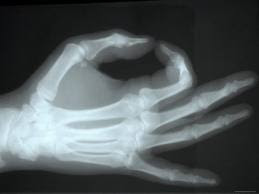
While tuned in to the Weather Channel, Marianne heard the word ablation used, and she passed it on as an interesting term. Ablation came from a Latin word meaning removal or carrying away, and it has a wide range of uses.


In Marianne’s context, it refers to the gradual removal of snow or ice by wind erosion. It is used when speaking of glaciers or a snow pack. Of course, ablation can also happen more quickly when direct sunlight or higher temperatures melt the snow or ice.


Other uses of the word betray its dependence on the original Latin word that meant removal.

  • surgical removal of an organ or tissue (e.g., cardiac, endometrial, dermabrasion)
  • removal of material from a surface, whether by wind (e.g., sand in a desert) or heat (an electrode)
  • the loss of surface material from a body as a result of frictional heating as it passes through an atmosphere (e.g., spacecraft heat shield)


SIDEBAR: laser ablation


Available from McFarland & Co.: Word Parts Dictionary, 2nd edition


Check out Mike's program-based books here:
Arbutus Press
or at Amazon.com


Listen to Mike’s program in real time every Tuesday morning, 9:00 - 10:00 a.m. EST, by going to wtcmradio.com and clicking on Listen Now.

There is a collection of podcasts. Go to wtcmradio.com and click on Podcasts. Scroll down The Ron Jolly Show to find the Words to the Wise audio button.


Visit The Senior Corner at seniors.tcnet.org


Saturday, November 27, 2010

Laughing Stock


Ralph asked about the origin of “laughing stock,” an object of laughter, particularly when offered in ridicule or contempt.

The original meaning of stock [862] was a tree stump or a block of wood. By the early 14th century, it had come to mean a senseless or stupid person, probably by analogy to a chunk of wood that was lifeless, motionless, and devoid of sensation. Laughing stock shows up as a set phrase in 1533. Ludicrous blockhead would be equivalent.


What I found most interesting when I was checking the online Oxford English Dictionary was the sheer number of meanings filed under the headword stock. There must be over 70 of them, and they cover an incredible range of meanings over the centuries. I’ll share just a few.

  • an idol or sacred image
  • the source of a family line or descent
  • an obsolete instrument of punishment
  • a gun carriage
  • a fireplace ledge
  • a frame supporting a spinning-wheel
  • a perch for a bird
  • an alms box
  • a basin used for holy water
  • the block of wood from which a bell is hung
  • the handle of a pistol
  • a mouse trap
  • a swarm of bees
  • an article of clerical attire
  • the udder of a cow
  • a rabbit burrow
  • an endowment
  • reputation
  • farm animals
  • provisions for future use
  • goods on hand
  • liquid foundation for a soup
  • a company of actors who work at a particular theater
  • a standardized or conventional type

Incredible. It causes me to stand stock still.


Available from McFarland & Co.: Word Parts Dictionary, 2nd edition


Check out Mike's program-based books here:
Arbutus Press
or at Amazon.com


Listen to Mike’s program in real time every Tuesday morning, 9:00 - 10:00 a.m. EST, by going to wtcmradio.com and clicking on Listen Now.

There is a collection of podcasts. Go to wtcmradio.com and click on Podcasts. Scroll down The Ron Jolly Show to find the Words to the Wise audio button.


Visit The Senior Corner at seniors.tcnet.org


Wednesday, November 24, 2010

Truant


Chuck was reminiscing about schools in the good old days, and one of the terms that came up was “truancy officer.” This was the person you had to deal with when you ditched school.

Originally, truant was an abusive term that signified a beggar, a vagabond, a wretch, and an idle knave. By the 15th century, it was applied to a school child who was AWOL. It lead to words such as truantry, truantism, and truandal, all of which have disappeared.

These terms all owe their existence to a Gaelic word that meant a wretch or a vagabond.


SIDEBAR: Truant Officer Donald


Available from McFarland & Co.: Word Parts Dictionary, 2nd edition


Check out Mike's program-based books here:
Arbutus Press
or at Amazon.com


Listen to Mike’s program in real time every Tuesday morning, 9:00 - 10:00 a.m. EST, by going to wtcmradio.com and clicking on Listen Now.

There is a collection of podcasts. Go to wtcmradio.com and click on Podcasts. Scroll down The Ron Jolly Show to find the Words to the Wise audio button.


Visit The Senior Corner at seniors.tcnet.org


Saturday, November 20, 2010

Skittish


While she was watching an animal rescue show on a cable channel, Noreen heard the word skittish and wondered about its origin.

Originally, according to the Oxford English Dictionary, it referred to a human disposition characterized by levity, frivolity, or excessive liveliness. A century later [1510], it was applied to horses that were unruly, shy, and likely to run away when startled.

It may have come from an Old Norse word that meant to shoot or throw. Such a sudden motion would spook a nervous horse.

From that same base came the word skit, used to designate a parody or satirical comedy. In those presentations, the writer would metaphorically take shots at the subject of ridicule.

Another skit had a totally unrelated origin and meaning. It meant diarrhea in sheep, and it led to the English word shit.


Available from McFarland & Co.: Word Parts Dictionary, 2nd edition


Check out Mike's program-based books here:
Arbutus Press
or at Amazon.com


Listen to Mike’s program in real time every Tuesday morning, 9:00 - 10:00 a.m. EST, by going to wtcmradio.com and clicking on Listen Now.

There is a collection of podcasts. Go to wtcmradio.com and click on Podcasts. Scroll down The Ron Jolly Show to find the Words to the Wise audio button.

Visit The Senior Corner at seniors.tcnet.org


Wednesday, November 17, 2010

Crapulent


Dick from Kingsley phoned in the word crapulent. It started as a Greek word meaning a hangover. As the Oxford English Dictionary points out, when the Romans adapted the word, they placed the focus on the cause of the hangover, excessive drinking. So sometimes crapulent is used to mean the suffering caused by overindulgence, and sometimes the imbibing itself.

Vinolent was once a companion word. Specifically, it referred to excessive intake of wine, and the resulting headache and nausea. And, at one time, methomania was a classy word for alcoholism. It came from a Greek word meaning a sweet wine, and it led to the English word mead. Dipsomnia was a synonym; at its core was a Greek word meaning thirst. Inebriation fits the same category. In Latin, ebrius meant drunk. Intoxicated literally means having imbibed poison, though now it is used as a synonym for drunk. Finally, bibulous means addicted to drinking.

Dick also asked if the word crap (as in, I feel like crap after last night’s binge) is related to crapulent. It turns out that it’s not. Crap comes from the Dutch krappe, originally the grain trodden under foot in the barn and mingled with the straw and dust. Eventually, it evolved into excrement.

Time to give nephalism* a chance?

*[Greek νnφειν, to be sober]


Available from McFarland & Co.: Word Parts Dictionary, 2nd edition


Check out Mike's program-based books here:
Arbutus Press
or at Amazon.com


Listen to Mike’s program in real time every Tuesday morning, 9:00 - 10:00 a.m. EST, by going to wtcmradio.com and clicking on Listen Now.

There is a collection of podcasts. Go to wtcmradio.com and click on Podcasts. Scroll down The Ron Jolly Show to find the Words to the Wise audio button.


Visit The Senior Corner at seniors.tcnet.org


Saturday, November 13, 2010

Salvable or Salvageable?


Don Ranville from Cedar asked if the word salvable is on equal footing with, or perhaps even preferable to, salvageable. Both involve rescuing and recycling, and each can be used to define the other. It turns out that while there is equivalency, salvageable is more popular today. A Google search yields 85,800 hits for salvable, and 1,600,000 hits for salvageable.

Salvable started out as a 17th century theological term. It meant “admitting of salvation.” By the late 18th century, it had become secularized. It referred to a ship or a ship’s cargo that could be salvaged. The last time that it was in predominant use was at the very beginning of the 20th century.

Salvageable is a late arrival. The first written citation in The Oxford English Dictionary is from 1976. Ultimately, it tracks back to the Latin salvare, to save. In fact, so does salvable, so they are simply different forms of the same word.

Another related word coming from the same Latin verb is savable/saveable. A word that shows up in 1450, it at first shared the theological sense of “conducive to salvation.” Other words derive from salvare. They include

  • insalvabilty: incapability of being saved
  • salvage: the saving of property
  • salvatella: obsolete name for a vein on the back of the hand
  • salvation: the act of saving
  • salvative: healing
  • salvator: one who saves
  • salvatory: a place of preservation
  • salvatrice: a female savior
  • savior: one who rescues from peril.


Available from McFarland & Co.: Word Parts Dictionary, 2nd edition


Check out Mike's program-based books here:
Arbutus Press
or at Amazon.com


Listen to Mike’s program in real time every Tuesday morning, 9:00 - 10:00 a.m. EST, by going to wtcmradio.com and clicking on Listen Now.

There is a collection of podcasts. Go to wtcmradio.com and click on Podcasts. Scroll down The Ron Jolly Show to find the Words to the Wise audio button.

Visit The Senior Corner at seniors.tcnet.org


Wednesday, November 10, 2010

Margarita


Our local newspaper, the Traverse City Record Eagle, runs a nostalgia feature called 100 Years Ago Today. Lowell from Interlochen called in an item that he found: “After the business meeting held in Northport, the ladies of Delta Phi Delta served refreshments, including punch, wafers, and margaritas.”

We all had a chuckle imagining the ladies sitting in wicker chairs on the front porch, drinks in hand, listening to Jimmy Buffet on the tinny gramophone as a caged parrot chattered in the background. There are dozens of variations based on flavoring, but the basic margarita uses fresh lime juice, tequila, and triple sec.


Ann from Traverse City and Lorraine from Torch Lake called in to set us straight. Ann recalled that in the 1930s, her mother and grandmother would top a cracker with frosting and sprinkled nuts and call it a margarita. Lorraine said that she knew of a cookie called a margarita. This struck everyone as more likely than the drink scenario.

A current recipe for margarita cookies calls for

  • 2 1/1 cups all-purpose flour
  • 1 cup butter
  • ¾ cup sugar
  • 1 egg yolk, lightly beaten
  • 1 grated rind of 1 lime
  • 2 tsp. orange liqueur or 1 tsp. of orange extract.
  • Pinch of salt
  • 1 ¼ cups confectioners' sugar for decoration
  • 2 tbsp white tequila

My guess is that a recipe from 1910 would not have included liqueur or tequila.

Towards the end of the program, Al from Acme reported on the margarita that he found in an old, unabridged dictionary; it meant a vessel for consecrated hosts. While Al made a great find, I think we’d have to discount any connection to the ladies of Northport with that one. It’s a term used in the Greek Church for the vessel containing the consecrated hosts that were not consumed during the liturgical service.

All of these items, including the female name Margarita or Margaret, owe their existence to a Latin word that means pearl. In turn, that came from a Greek word meaning the same thing.

SIDEBAR: Margaritaville


Available from McFarland & Co.: Word Parts Dictionary, 2nd edition


Check out Mike's program-based books here:
Arbutus Press
or at Amazon.com


Listen to Mike’s program in real time every Tuesday morning, 9:00 - 10:00 a.m. EST, by going to wtcmradio.com and clicking on Listen Now.

There is a collection of podcasts. Go to wtcmradio.com and click on Podcasts. Scroll down The Ron Jolly Show to find the Words to the Wise audio button.


Visit The Senior Corner at seniors.tcnet.org


Saturday, November 06, 2010

Prosthesis


As he was driving near Munson Medical Center, Carl noticed a sign advertising prosthetics, and he wondered about the word. It comes from a Greek verb meaning “to place before.”

Prosthetics refers to the replacement of missing or defective parts of the body by artificial substitutes. The artificial replacement itself is called a prosthetic device or a prosthesis.

But I find it fascinating that the word was given that medical application only in 1706. Before that time [1550], it was a grammar term signifying the addition of a letter or a symbol to a word. George William Kitchin’s A Historical Grammar of the French Tongue gives this explanation:

§ “The letters added to the primitive word may be either (1) prosthetic, that is to say, put at the beginning of a word; (2) epenthetic, or put in the body of a word; or (3) epithetic, or put at the end of a word.”

He goes on to give examples derived from Latin.

§ “Before the initial sounds sc, sm, sp, st (which are hard to pronounce), the French have placed an e, which renders the sound more easy by doubling the s: espace, spatium; espèce, species; espèrer, sperare; estomach, stomachum; esclandre, scandalum, [etc.]”


Its opposite is apheresis, a mirror image, since it started life as a grammatical term, then was later absorbed into medicine.

  • The taking away or suppression of a letter or syllable at the beginning of a word [1611].
  • Med. Obs. Aphæresis in medicine denotes a necessary taking away or removal of something that is noxious. In surgery, an operation whereby something superfluous is taken away [1880]. OED


Available from McFarland & Co.: Word Parts Dictionary, 2nd edition


Check out Mike's program-based books here:
Arbutus Press
or at Amazon.com


Listen to Mike’s program in real time every Tuesday morning, 9:00 - 10:00 a.m. EST, by going to wtcmradio.com and clicking on Listen Now.

There is a collection of podcasts. Go to wtcmradio.com and click on Podcasts. Scroll down The Ron Jolly Show to find the Words to the Wise audio button.


Visit The Senior Corner at seniors.tcnet.org


Wednesday, November 03, 2010

Straw Poll


The term straw poll was bandied about recently by political pundits and several listeners wondered about its origin.

A straw poll is an unofficial poll or vote taken to see which way people are leaning or to discover hot-button issues. The results are not binding, but they may be useful to a pollster.

The term is related to “throwing straws into the wind,” a method used to this day by golfers to learn which way the wind is blowing so that they can compensate for it. In A Ruler of Men, O’Henry wrote, “A straw vote only shows which way the hot air blows.”

Several other popular terms and proverbs use the word straw.

  • draw the short straw: become the one selected for a task, especially an odious one. The leader holds straws in his hand in such a way that they all stick up to the same height, but one of them (concealed by his fist) is shorter than the others.
  • grasp at straws: make a desperate attempt to save oneself. However ineffective, a drowning man will clutch at flimsy reeds in order to survive.
  • make bricks without straw: perform a duty without the materials or information necessary to do it right. In early brickmaking, straw was the binding material for sun-dried bricks. This tracks back to Exodus 5:7.
  • straw boss: a foreman who gives orders but has no authority to enforce them. Late 19th century: “The (real) boss attended to the grain going into the thresher. The secondman (or straw boss) watched the straw coming out and hence had little to do.” [The Facts on file Encyclopedia of Word and Phrase Origins, Robert Hendrickson]
  • straw dog: the ancient Chinese used straw dogs in their sacrifices to the gods. In The Book of 5,000 Characters, Lao Tzu wrote, “Heaven and Earth are not humane. They regard all things as straw dogs . . .” In a modern business application, a straw dog is a deliberately expendable idea floated past a client to make the real proposition look even better.
  • strawfoot: Union Army slang for a raw recruit who still had straw from the farm stuck to his boots.
  • straw man: an imaginary enemy or an invented argument brought up in order to be triumphantly vanquished.
  • straw that broke the camel’s back: the final minor irritation or burden that sends things over the brink. By itself, it would be insignificant, but added to all that came before it, it has serious consequences. A variant is, “that’s the last straw.”


Available from McFarland & Co.: Word Parts Dictionary, 2nd edition


Check out Mike's program-based books here:
Arbutus Press
or at Amazon.com


Listen to Mike’s program in real time every Tuesday morning, 9:00 - 10:00 a.m. EST, by going to wtcmradio.com and clicking on Listen Now.

There is a collection of podcasts. Go to wtcmradio.com and click on Podcasts. Scroll down The Ron Jolly Show to find the Words to the Wise audio button.


Visit The Senior Corner at seniors.tcnet.org


Food experts

Listen to the podcast here . It may seem a bit limited, not to say odd, but a number of scientists devote their entire career to studying on...