Please click the Follow button below to get updates from The Professor.

Follow this blog

Saturday, May 18, 2013

Apotheosis


The Traverse Symphony Orchestra performed its last concert of the season last week, and it included Beethoven’s 7th Symphony, one of my all-time favorites. The program notes included a quote from Richard Wagner, who called it “the apotheosis of the dance.” Since the first time that I encountered that quote years ago, it has neatly summed up this rhythmic masterpiece for me.

Apotheosis comes from a Greek verb meaning to make a god of. Shades of meaning include

  • transformation into a god, deification
  • the ascription of divine power or virtue; exaltation
  • a deified ideal
  • ascension to glory

Related words include apotheosize, apotheosized, and apotheosy.

Check out Mike's program-based books here:
 Amazon.com

Listen to Mike’s program in real time every Tuesday morning, 9:10 - 10:00 a.m. EST, by going to wtcmradio.com and clicking on Listen Now. You’ll also find about a month’s worth of podcasts there under The Ron Jolly Show.


Wednesday, May 15, 2013

With Bated Breath


Brian from Interlochen came across the phrase with bated breath and wondered what it meant and where it came from.

The first thing to note is that the spelling is b-a-t-e-d, not b-a-i-t-e-d. A person with baited breath would have been eating worms or minnows.

Bated in this sense amounts to “held breath.” It goes back to Old French and Anglo-Norman words that meant to reduce, decrease, or beat back. Bated breath occurs when someone is shocked, terrified, or otherwise stunned into breathlessness.

Abate and rebate are allied words.

Available from McFarland & Co.: Word Parts Dictionary, 2nd edition

Nook edition

Check out Mike's program-based books here:
 Amazon.com

Listen to Mike’s program in real time every Tuesday morning, 9:10 - 10:00 a.m. EST, by going to wtcmradio.com and clicking on Listen Now. You’ll also find about a month’s worth of podcasts there under The Ron Jolly Show.


Saturday, May 11, 2013

Crepuscular


 A television program featuring the white-tailed deer referred to them as crepuscular. The word is applied to animals that are active at twilight. It comes from the Latin crepusculum, dusk or twilight.

Related words include crepuscle (twilight), crepuscule (twilight), crepusculine (dusky, pertaining to twilight), crepusculous (indistinct, dim, dusky), and crepusculum (twilight, dusk).

Other time-of-day words were discussed in an earlier blog. 

Available from McFarland & Co.: Word Parts Dictionary, 2nd edition

Nook edition

Check out Mike's program-based books here:
 Amazon.com

Listen to Mike’s program in real time every Tuesday morning, 9:10 - 10:00 a.m. EST, by going to wtcmradio.com and clicking on Listen Now. You’ll also find about a month’s worth of podcasts there under The Ron Jolly Show.


Thursday, May 09, 2013

I WOULD APPRECIATE YOUR VOTE


The Top 100 Language Lovers 2013 competition hosted by the bab.la language portal and the Lexiophiles language blog has just started and your blog “Wordmall” (http://verbmall.blogspot.com/) has been nominated.

The following voting period extends from May 22nd to June 9th, during which everyone can vote for their favourite blog, Facebook page and/or Twitter account. The results will be made public on June 12th.

For further information on the Top 100 Language Lovers 2013 competition, visit
http://www.lexiophiles.com/language-lovers-toplist/top-100-language-lovers-2013-nominate-your-favourite-now

Saturday, May 04, 2013

Senior Spelling Bee Results


Here are the Senior Citizen Spelling Bee Winners for 2013. The Bee is a function of the Traverse City (MI) Senior Center.

First Place: Chris Olsen, Alan Olsen. They correctly spelled sybotic, then validated with oenology.

Second Place: Ronald Smith, Cornelia Hart, Dick Fidler. They went out on sybotic (pertaining to a swineherd).

Third Place: Linda Blakkon, Eleanor Lynn. They went out on exsert (the opposite of insert).

Here is a list of the words actually used. The contest took 35 rounds. Participants work in teams, and words are drawn blindly from a container.

assiduous, burnish, impute, equivocate, ignoble, idyll, equipoise, cabal, obviate, cadge, calumniate, overweening, sagacious, salubrious, salient, iconoclastic, homogeneity, salutary, mendacity, incredulous, mendicant, mercurial, mitigate, morose, capricious, disabuse, castigate, expostulate, torpor, torrid, suppliant, dynamo, poignant, sycophant, mollify, tautology, verisimilitude, trousseau, truculence, turgid, umbrage, regale, vendible, tyro, surfeit, taciturn, refractory, turpitude, typography, turbid, perfidious, prosaic, peremptory, tutelary, timorous, umbratilous, misogynist, temerity, misanthrope, proscribe, hermetic, mien, perfunctory, minion, auspicious, imperious, malinger, partisan, approbation, appropriate, dulcet, garrulous, garrulity, vesicate, peripatetic, stymie, veritable, volubility, broach, boisterous, beatify, bedizen, intransigence, impetuous, vituperate, viduity, virology, expurgate, edifying, exscind, exsert, denigrate, farraginous, aichmophobic, rhonchial, zymurgy, ochlesis, baize, obvallate, oneirodynia, sagittiform, agrestic, jejunator, roscid, jejune, blennoid, scissile, xerodermia, sybotic, oenology

I am always amazed and humbled by their performance. The human mind: use it or lose it.

Available from McFarland & Co.: Word Parts Dictionary, 2nd edition

Nook edition

Check out Mike's program-based books here:
 Amazon.com

Listen to Mike’s program in real time every Tuesday morning, 9:10 - 10:00 a.m. EST, by going to wtcmradio.com and clicking on Listen Now. You’ll also find about a month’s worth of podcasts there under The Ron Jolly Show.


Wednesday, May 01, 2013

Range


Lowell from Interlochen followed up on the word range, which is applied to an array of burners on top of an oven. His question was, how does the range plied by cowboys (Home on the Range), fit in?

The basic meaning of range is a row, line, or series, but many meanings have taken over from there. Range became the American word for the grazing ground for livestock. The verb range meant to wander over a large area. Along with the buffalo, the cattle roamed.

Range is one of the words with an incredible number of meanings. Let’s review some of them.
  • a rank or file of hunters or soldiers.
  • a row, line, or series of things.
  • a line of mountains, hills, or other large natural features.
  • a row of buildings; a continuous stretch of a building.
  • a measure of young timber or underwood.
  • a (usually numbered) column of townships, six miles in width, extending north and south parallel to the principal meridian of a survey.
  • a set of points on a straight line, esp. as determining a pencil of lines joining each point to some non-collinear point.
  • a rank, a class, an order; a level in a hierarchy.
  • the elevation of a gun in firing; the direction of a shot.
  • in glazing: the length of a line perpendicular to one edge of a diamond-shaped quarry and meeting the opposite angle.
  • Shoemaking: the lie or line of the upper edge of a counter.
  • any gas or electric cooker incorporating burners or heating elements and one or more ovens.
  • the fat produced from roasting meat, dripping.
  • a fence, an enclosure.
  • an unbroken stretch of railing, balustrade, battlement, or the like.
  • a strip of leather from which smaller pieces are cut.
  • a strip of glass from which smaller panes are cut.
  • Nautical: a portion of anchor cable drawn up on deck, of sufficient length to enable the anchor to descend smoothly.
  • Mining: a deposit or vein of ore, mineral, etc.
  • Nautical: a large cleat for securing tacks and bowlines.
  • a wooden stake to which cattle are tied when indoors.
  • a shaft running between two horses pulling a coach or carriage.
  • an area marked out for a jousting tournament.
  • grazing ground for livestock.
  • an extensive stretch of grazing or hunting ground.
  • an area of land or sea used as a testing ground for rockets, military equipment, etc.
  • a walk, a stroll.
  • opportunity or scope for ranging about.
  • a single pass in the application of a file to the notches of a saw blade.
  • a set of different things of the same general type.
  • a set of goods manufactured or for sale.
  • the maximum distance to which a weapon will shoot, or over which a bullet or other projectile will travel.
  • Physics: the distance over which a physical force is effective.
  • the maximum distance at which a radio or television transmission can effectively be received.
  • the distance that can normally be covered by an aircraft or other vehicle without having to refuel.
  • the distance of an object as detected by radar.
  • the scope of something.
  • Nautical: field of vision.
  • the scope or extent of a person's knowledge or abilities.
  • the span or scope of a scientific instrument.
  • the variation of pitch a musical instrument or voice can produce.
  • the size of the difference between the greatest and least amount or degree.
  • a series or scale of values or degrees between particular upper and lower limits.
  • Mathematics: the set of values that the dependent variable of a function can take.
  • Statistics: the difference observed in a sample between the smallest and largest values of a variable.
  • the area over which the occurrence of a phenomenon, artifact, etc., is known or possible.
  • Botany and Zoology: the geographical area within which a given species or other taxon of plant or animal occurs.
  • in an unbroken straight line.

Available from McFarland & Co.: Word Parts Dictionary, 2nd edition

Nook edition

Check out Mike's program-based books here:
 Amazon.com


Listen to Mike’s program in real time every Tuesday morning, 9:10 - 10:00 a.m. EST, by going to wtcmradio.com and clicking on Listen Now. You’ll also find about a month’s worth of podcasts there under The Ron Jolly Show.


Saturday, April 27, 2013

Cor/Gor


Daniel Jablonski wrote: “I once heard the expression 'Cor Devil' used in vernacular, methinks in the stage play 'Me and My Gal' by the lead male. As you know, the play was set in prewar England, and I have never heard that expression used again before or since. I remember a hint of this with the simple expression 'cor', but again I don’t know where or when. What is the meaning of this 'cor'? I would also like to know if it’s still in common use anywhere, and if there’s some word or expression in 'American' that has a root in this word 'cor'. Is this a really bad cuss word?"

I can't track down "Cor Devil," but I remember a British exclamation that is close. The phrase was "Gor blimey," also rendered as "Cor blimey." It was a minced oath (a euphemism designed to avoid a religious word or expression), and in standard English it would read as, "may God blind me if I am not telling the truth." In short, "God blind me."

In some British dialects—and almost certainly Cockney—God would change into Gord, thence to Gor. The combination "God Devil" certainly seems an odd juxtaposition, though.

In American English, the most common avoidance of the word God is probably Gosh. Golly and Gad are not far behind. There is a difference of opinion on whether such usage is appropriate. Proponents would say that it is a good thing, since it consciously goes out of its way to avoid blasphemy. Opponents—and this is borne out on several religious web sites—argue that minced oaths are just as bad as the original, and should not issue from the mouths of committed Christians. 

The Gor Blimey was also the name of a British service cap in World War I.


Available from McFarland & Co.: Word Parts Dictionary, 2nd edition

Nook edition
Check out Mike's program-based books here:
 Amazon.com

Listen to Mike’s program in real time every Tuesday morning, 9:10 - 10:00 a.m. EST, by going to wtcmradio.com and clicking on Listen Now. You’ll also find about a month’s worth of podcasts there under The Ron Jolly Show.


Wednesday, April 24, 2013

A Moo-ving Tail


We held a practice session today for the upcoming Traverse City Senior Citizen Spelling Bee. One of the words pulled drew hoots from the participants because of its rarity. The word was the adjective mugient. It is obsolete, but it meant lowing or bellowing. An equally rare word was the noun mugiency, the act of bellowing.

It comes from the Latin mugire, to bellow, and the Latin word may well have been onomatopoeic—an imitation of the sound that a cow or steer makes. In fact, the Oxford English Dictionary links it to the English moo.

That same source suggests a vague connection with the word muzzle, the projecting part of an animal’s face. The implication is that the shape of the mouth and lips when pronouncing the first syllable, mu-, resembles bellowing.

That aside, there was also the adjective remugient, signifying a very deep and resonating bellow. It was a booming reverberation, a back and forth exchange between bovines.

Available from McFarland & Co.: Word Parts Dictionary, 2nd edition

Nook edition

Check out Mike's program-based books here:
 Amazon.com


Listen to Mike’s program in real time every Tuesday morning, 9:10 - 10:00 a.m. EST, by going to wtcmradio.com and clicking on Listen Now. You’ll also find about a month’s worth of podcasts there under The Ron Jolly Show.


Saturday, April 20, 2013

Range or Stove?


Lowell from Interlochen, Michigan, asked why we have two words that mean practically the same thing: range and stove. Many people use the words interchangeably, but there are distinctions worth keeping.

Stove came from an Old English word that meant a hot air bath, a type of sauna. Originally, to stove was to sweat. Early on, it referred to a closed basket for sweating a gamecock or a hothouse for plants. By the 16th century, it had come to mean a closed box in which heat is produced in order to cook.

Range comes from an Anglo-Norman word that meant a row or a file. It is connected to the word rank, which meant a row, line, or series of things. More properly, range refers to the array or configuration of burners on top of an oven.  The first instance quoted in the Oxford English Dictionary goes back to 1423.

Oven came from an Old Frisian word that meant an earthenware cooking pot. Soon after, the Old English form came to mean a stand-alone compartment which is heated to cook or warm food.

Cook came from a Latin noun that meant a person who prepares food for the table.

Available from McFarland & Co.: Word Parts Dictionary, 2nd edition

Nook edition

Check out Mike's program-based books here:
 Amazon.com

Listen to Mike’s program in real time every Tuesday morning, 9:10 - 10:00 a.m. EST, by going to wtcmradio.com and clicking on Listen Now. You’ll also find about a month’s worth of podcasts there under The Ron Jolly Show.



Saturday, April 13, 2013

Belt


Kelly Croff wrote,  “You can put a belt on your pants, belt a homerun or someone in the face, or take a belt of liquor. Where did the word belt come from, and why so many different uses?”

The core word belt came from the Latin balteus, which meant a girdle. The reason for the multiplicity of meanings is that the word is used literally and figuratively. In other words, it has been applied to many types of straps or strips with various uses, but it has also been applied to features or situations that bear a fanciful resemblance to a strap or strip – the Bible Belt or an asteroid belt, for instance.

Lining up some of the literal applications, we find
  • a flat strip of leather or other material used to bind articles of clothing or to support articles of use or ornament
  • an article worn as a symbol of proficiency, such as a Black Belt in martial arts
  • a broad, flat rubber strap passing around a wheel or shaft and used to move articles
  • a number of cartridges linked to one another used to feed ammunition into a machine gun
  • reinforcing material beneath the tread of a tire
Turning to some of the figurative uses, we find
  • a tract or land or a district that is wider than it is long, such as the Bible Belt or the green belt surrounding a city
  • a heavy blow, such as a belt to the mouth
  • a slang term for drinking, as in a belt of bourbon
  • slang for vigorous singing, such as belting out a song
  • slang for to hurry or rush, as in we belted down the road as fast as we could
  • an encircling route, such as The Beltway
The word belt shows up in a number of common sayings, including to hit below the belt, to tighten one’s belt, to get something under one’s belt, and belt it, which was a predecessor to zip it!

Available from McFarland & Co.: Word Parts Dictionary, 2nd edition

Nook edition
Check out Mike's program-based books here:

Listen to Mike’s program in real time every Tuesday morning, 9:10 - 10:00 a.m. EST, by going to wtcmradio.com and clicking on Listen Now. You’ll also find about a month’s worth of podcasts there under The Ron Jolly Show.


Wednesday, April 10, 2013

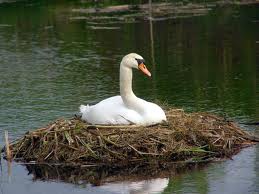
Caliology is for the Birds


A friend of mine is an ardent birder, and he was telling me about an old book that is in his collection. It is Birds’ Nests, by Charles Dixon, and it was published in 1902. The introduction indicates that Mr. Dixon was over the top when it came to his hobby.

“It is a somewhat remarkable fact that notwithstanding the extreme popularity of the subject of Birds’ Nests, no book has yet been published entirely devoted to these beautiful and curious objects. And yet their study – the science of Caliology – is one of the most fascinating branches of Ornithology, perhaps more intimately connected with these mental attributes of what man in his ignorance is pleased to consider the ‘lower animals,’ than any other.”

The word caliology prompted this posting. The suffix –ology means a discourse or science. The first half comes from the Greek καλιά [kalia], a wooden dwelling, hut, or nest. The only other word based on this root mentioned in the Oxford English Dictionary is caliological.

Another root meaning nest is based on the Latin nidus, a nest. It is the foundation of several words.
  • denidation:  the shedding of the superficial layer of the uterus, such as occurs during menstruation.
  • nidal:  (1) of or relating to a nest.  (2) of the lining of the uterus: exhibiting cyclical thickening in preparation for implantation of an ovum.
  • nidamental: (1) of the nature of or serving as a nest.  (2) serving as, or relating to, a receptacle for the ova of a marine invertebrate, especially a mollusc.
  • nidary: a place for building nests.
  • nidation: the cyclical proliferation of the endometrium in preparation for implantation of an ovum (or preceding menstruation).
  • nide:  a brood or nest of pheasants.
  • nidicole: an animal which lives in the nest, burrow, etc., of another species.
  • nidicolous:  of an animal: living in the nest, burrow, etc. of another species.
  • nidification:  the action of nest-building (especially by birds).
  • nidifuge:  a nidifugous bird.
  • nidifugous: of a young bird or (in later use also) other animal: well developed at birth or hatching and able to leave the nest almost immediately.
  • nidify: (1) to make a nest or nests.  (2) to colonize through the action of nesting.
  • nidulate: to build a nest.
  • nidus:  (1) a medium or place suitable for the nurture of germinal elements, eggs, embryos, etc.  (2) a collection or cluster of eggs.  (3) a source, focus, or reservoir of infection.  (4) a generative source, an origin; a place where some quality or principle is fostered. (5) a nucleus.

Available from McFarland & Co.: Word Parts Dictionary, 2nd edition

Nook edition

Check out Mike's program-based books here:
 Amazon.com

Listen to Mike’s program in real time every Tuesday morning, 9:10 - 10:00 a.m. EST, by going to wtcmradio.com and clicking on Listen Now. You’ll also find about a month’s worth of podcasts there under The Ron Jolly Show.


Saturday, April 06, 2013

Acroteleutic


As the bee meister, I’m preparing spelling lists for the upcoming senior citizen spelling bee in Traverse City, Michigan. Seniors work in teams of three to avoid the frayed nerves that often accompany a solo public performance.

At any rate, I came across one word in the list that caught my eye and piqued my interest. The word is acroteleutic, and it refers to a formula repeated at the end of a psalm. In some liturgies, that turns out to be the lesser doxology: Gloria Patri, et Filio, et Spiritui Sancto. Sicut erat in principio, et nunc, et semper, et in saecula saeculorum. Amen.  [Glory be to the Father, and to the Son, and to the Holy Spirit. As it was in the beginning is now, and ever shall be, world without end. Amen.]

The word is composed of two Greek components: ἄκρο [acro-], outermost, and τελευτή [teleute], end.

The word doxology (used in the second paragraph) incorporates δόξα [doxa], glory, and -λογος [logos], speaking.

Available from McFarland & Co.: Word Parts Dictionary, 2nd edition

Nook edition

Check out Mike's program-based books here:
 Amazon.com

Listen to Mike’s program in real time every Tuesday morning, 9:10 - 10:00 a.m. EST, by going to wtcmradio.com and clicking on Listen Now. You’ll also find about a month’s worth of podcasts there under The Ron Jolly Show.


Wednesday, April 03, 2013

Pool


Shawn asked about the word pool -- its origin, meaning, and use. According to the Oxford English Dictionary, here are three separate nouns with that spelling and two verbs.

Pool, n.1 is based on words in Dutch, Danish, Lithuanian, and German that meant a hole, bog, or swamp. Historically, variant meanings developed this way:
  • a small body of still or standing water
  • a lake of any size
  • a whirlpool
  • a puddle
  • a still, deep place in a river or stream
  • something resembling a pool
  • an oil-producing formation
  • a swimming pool

Pool, n.2 has an unknown origin. It is defined as a measure of work or materials used in roofing and flooring.

Pool, n.3 came from a French word meaning the collective stakes in a game. The meanings fell out this way:
  • a card game in which there is a collective stake to be won
  • the kitty or pot
  • any of various types of billiards
  • a shooting contest in which the competitors pay a certain sum for every shot fired
  • the proceeds divided among the backers of the winner in a sporting contest
  • an organized system of gambling on the results of football matches
  • an informal wager in which a group of participants stake identical (usually low) sums on a quantifiable aspect of an (often non-competitive) event
  • a fencing contest in which each member of one team fights each member of the other
  • a group of contestants or teams who compete against each other, especially to decide which should advance to the next round of a tournament
  • a common business fund from which backing is provided, especially for speculation on financial markets
  • a common supply of goods, commodities, or resources available for use when needed
  • a group of people whose abilities or services may be drawn upon when needed, or who share duties within an organization
  • a group of selected journalists and photographers who have special access to news sources, esp. in government or the military
  • a register of freelance dockers or sailors seeking employment

Pool, v.1 shares its origin with pool, n.1. Among its meanings are
  • to be or become marshy
  • of liquid, to stand or stagnate
  • of blood, to accumulate in parts of the vein system
  • to make a hole in a rock or the ground

Pool, v.2 is connected to pool, n.3.  A couple of the meanings are
  • to combine resources for the common benefit
  • to inform on someone

Available from McFarland & Co.: Word Parts Dictionary, 2nd edition

Nook edition

Check out Mike's program-based books here:
 Amazon.com

Listen to Mike’s program in real time every Tuesday morning, 9:10 - 10:00 a.m. EST, by going to wtcmradio.com and clicking on Listen Now. You’ll also find about a month’s worth of podcasts there under The Ron Jolly Show.
Visit The Senior Corner, a web site containing information for senior citizens.


Food experts

Listen to the podcast here . It may seem a bit limited, not to say odd, but a number of scientists devote their entire career to studying on...